Building the missing piece of end-to-end incident management for SafetyCulture's operations platform.
SC Next product event release
June 2025
Shasha Chaicharncheep Product Designer
Roger Chapman Product Director
Rey Artega Engineering Manager

My role
As sole product designer and de facto product manager on a five-month web project, I led design and product direction for a triad team of two frontend and one backend engineer.
Context
A missing piece in the safety platform.
SafetyCulture had lost customers because it lacked an end-to-end incident management capability. Without it, we weren't considered a true EHS platform or a full operations software solution. Competitors like Velocity EHS, Evotix, Intelex, Noggin and Falcony all had this covered.
The job to be done was simple: help customers prevent reoccurrence and mitigate risk in their environment. Incident Management market? For every $1 invested in safety, businesses see $4–6 back (OSHA); the cost of job injuries and illnesses in the US alone is estimated at $176–352 billion a year (AFL-CIO); and managers were already losing 20 hours a week to admin (West Monroe).
Problem
Stuck in spreadsheets and paper forms.
Research told us our personas (Heads of Safety and Safety Managers/Officers) were either still building an incident management process or stuck on paper forms, email and spreadsheets: disparate systems, manual reporting, and no way to surface trends from fragmented data. Visibility was thin, and institutional knowledge left whenever someone did.
We saw a way to win them over: automate the busywork, structure their data so trends became visible, support best-practice frameworks like ICAM, 5 Whys and Fishbone, and remove the friction of switching off spreadsheets and paper.
Process
Sprinting → early access → general availability.
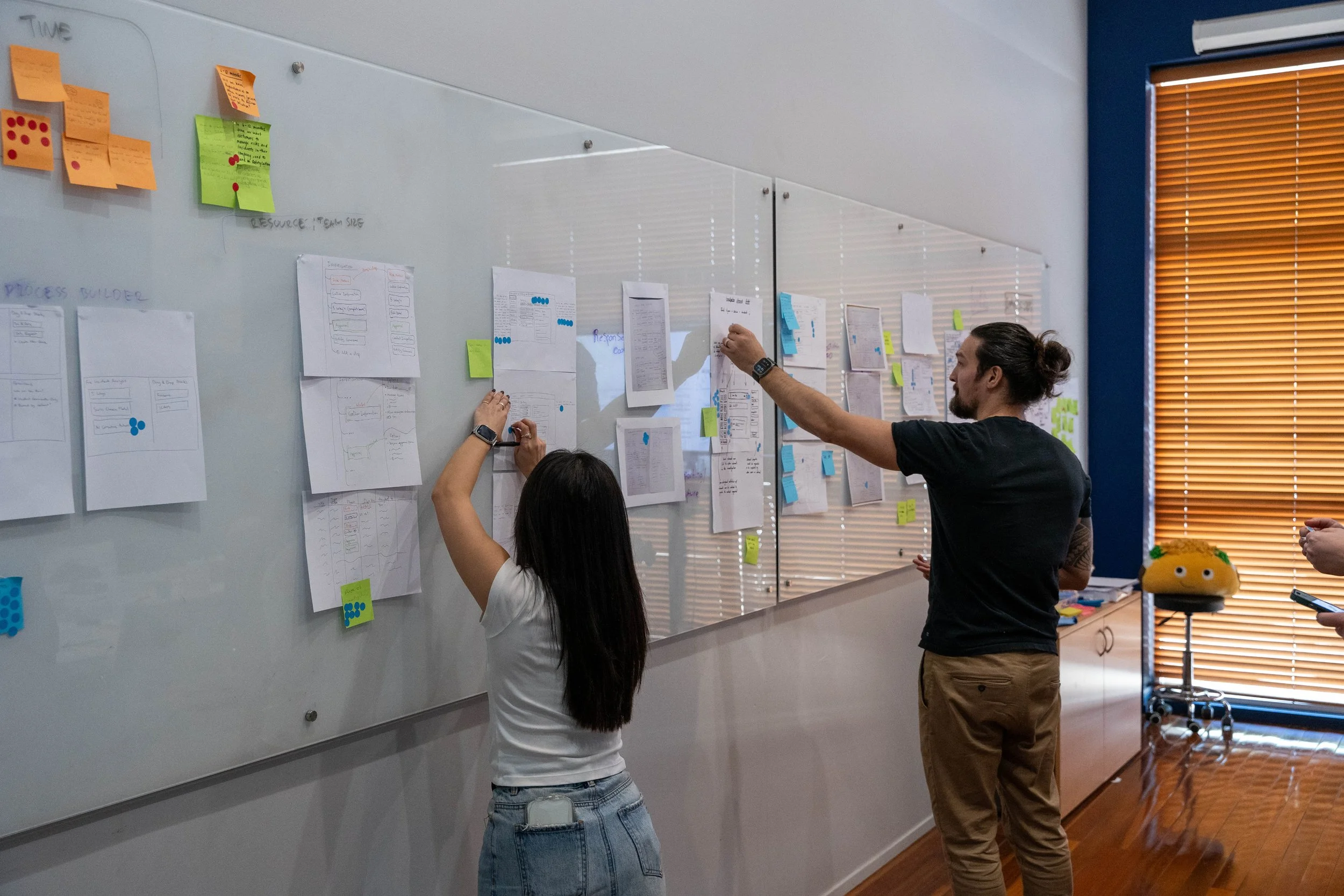
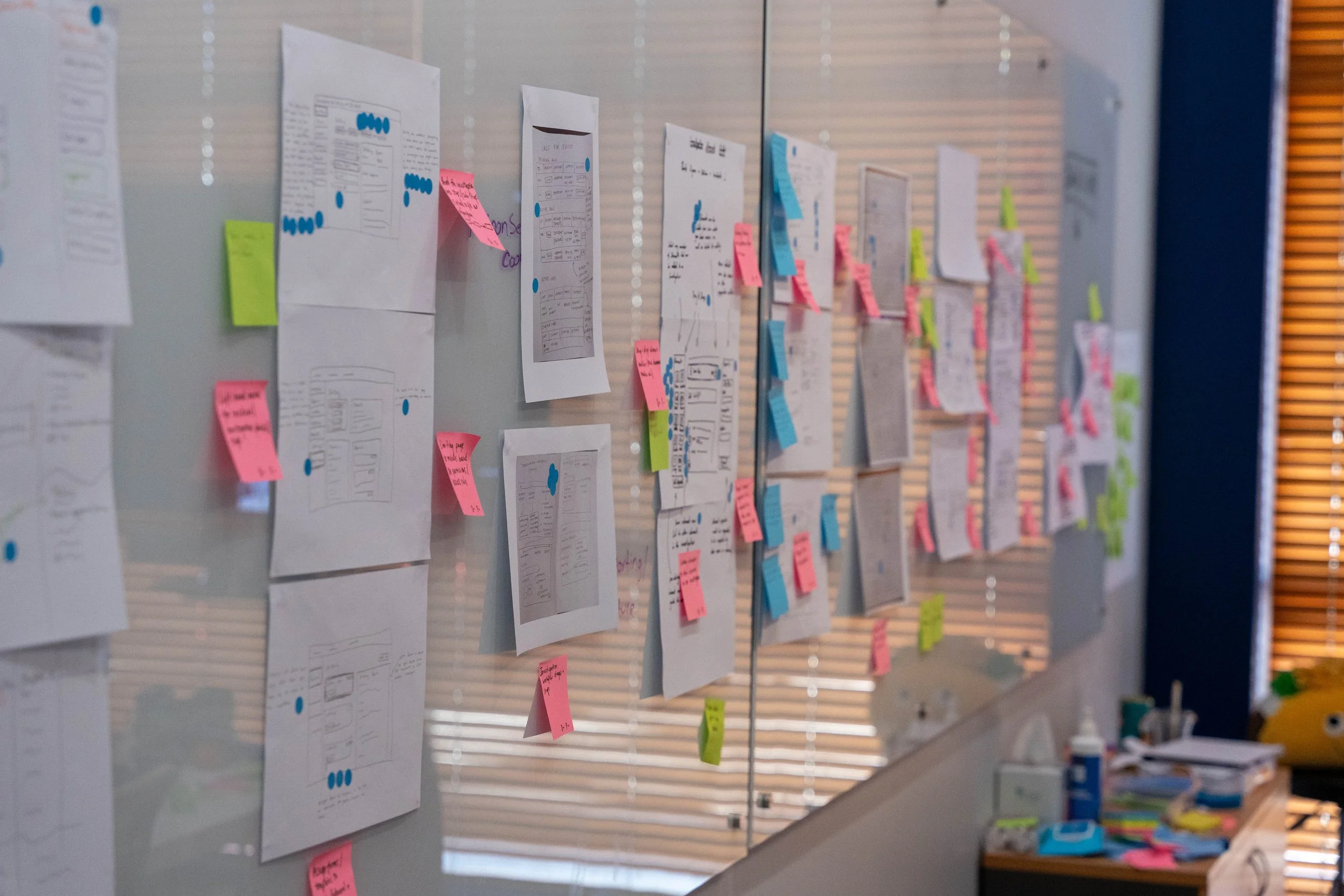
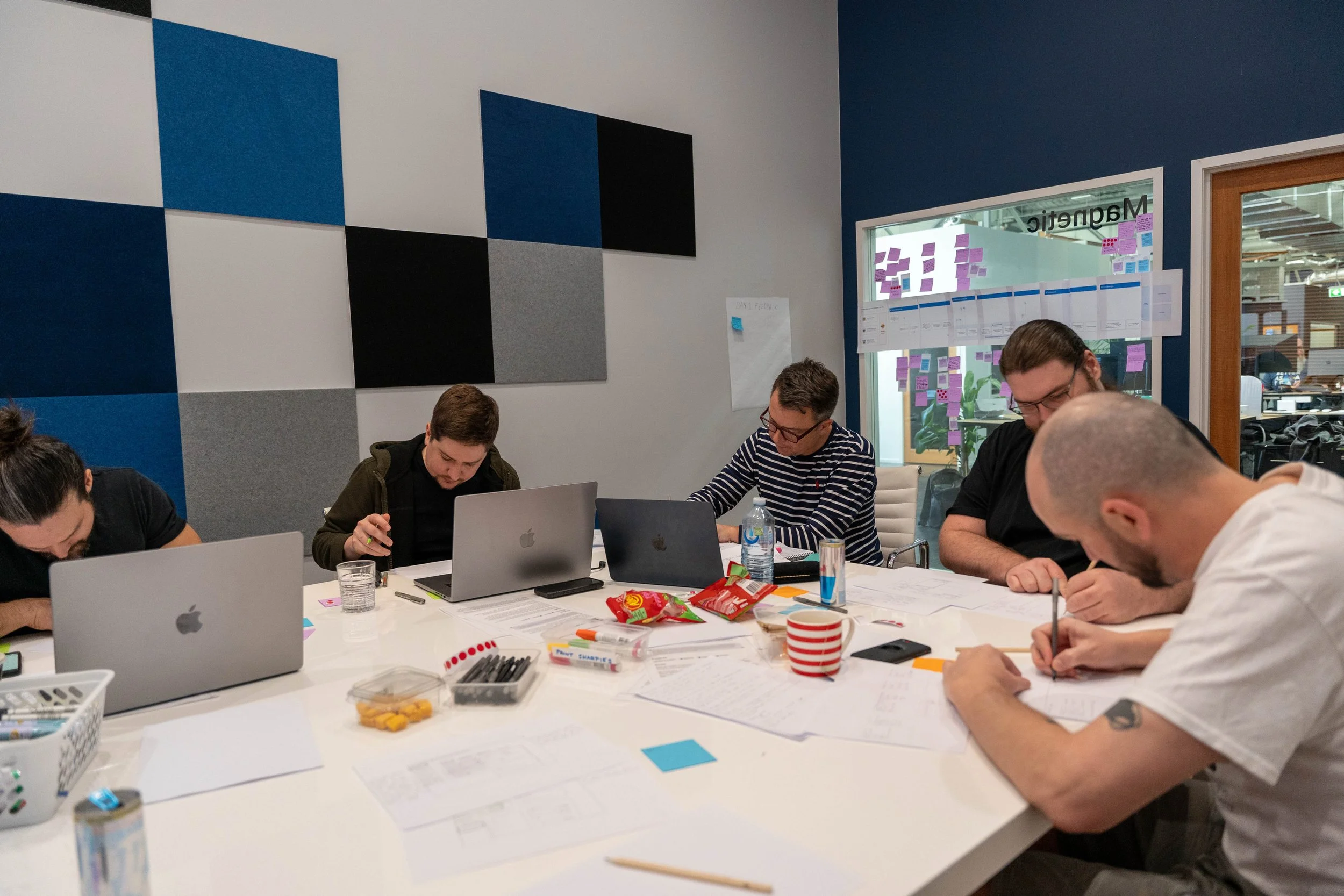
The project opened with a design sprint that I ran involving our CPO and CIO, followed by design exploration, wireframing, stakeholder interviews, and three rounds of exploratory and concept testing, plus a dedicated workshop to nail down data structures and tagging in the lead up to early access.
To hit a 3 month, February 2025 deadline for early access, we cut a lot from the MVP scope. In hindsight, we cut too much, what shipped was miles off what we'd validated in concept testing and didn't meet customer needs. Working with GTM, we scoped a closed early access release to a cohort of 221 customers, genuinely a test and learn phase to check whether we'd found product-market fit.
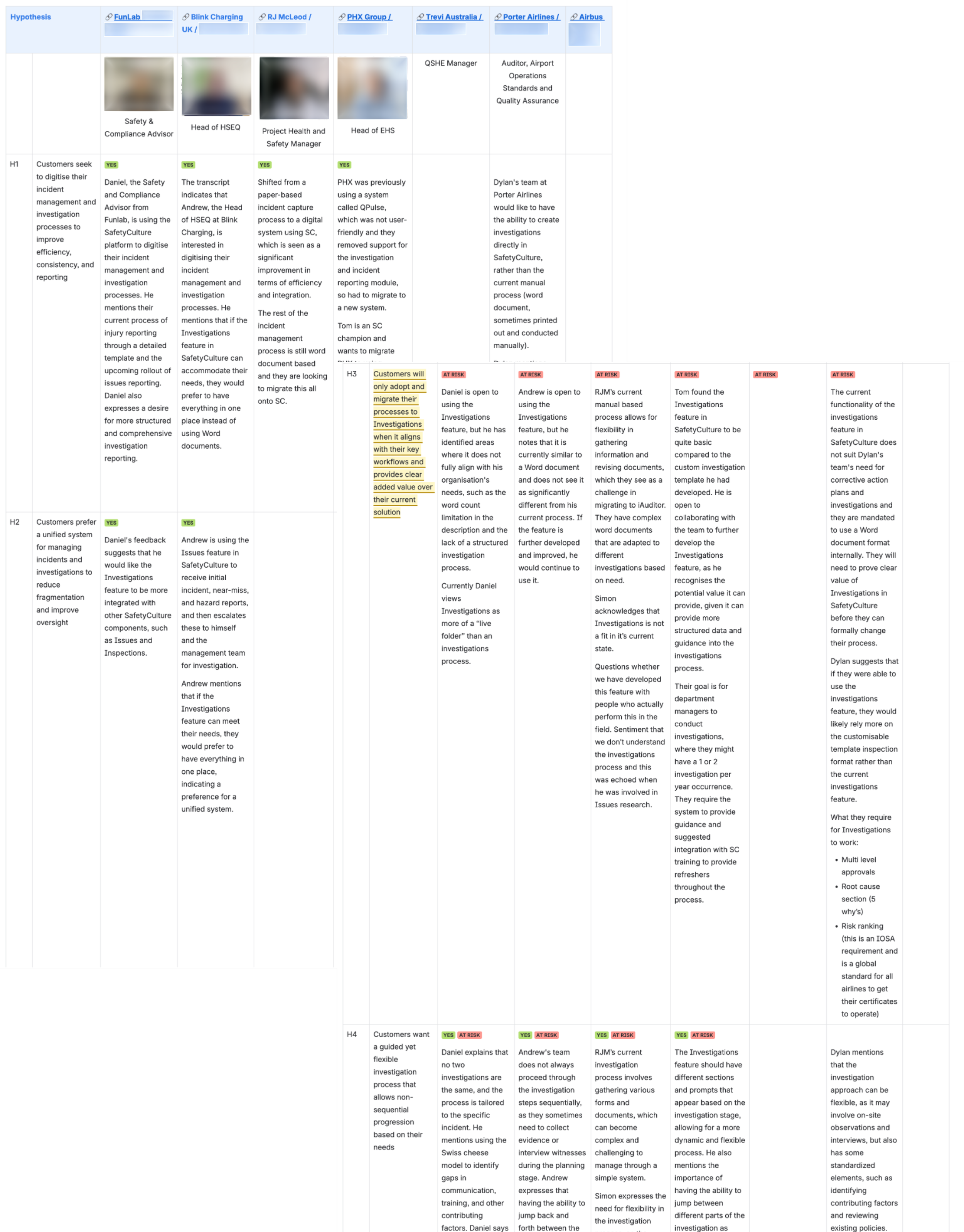
We hadn't: only 1 in 10 customers we spoke to said they'd migrate their processes to Investigations in its current state.
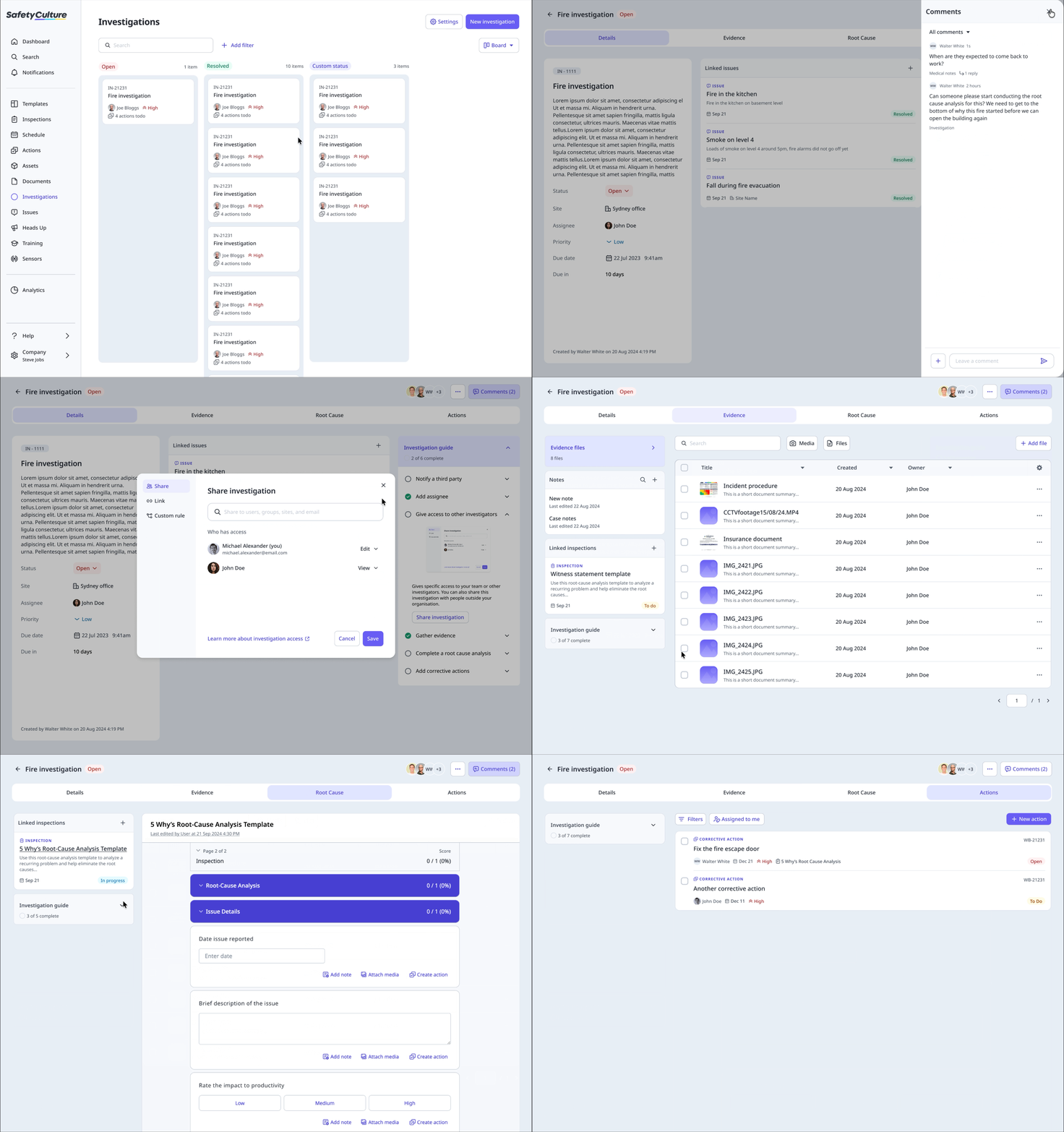
An early stage concept that we took to testing. This focuses heavily on integrating parts of the SafetyCulture platform such as inspections and actions to handle parts of the incident management workflow.
Early access feedback surfaced three clear themes: customers needed a more structured format for conducting investigations; analytics and trend data was a critical, unmet need ("how do I make sense of all my incident data?"); and investigations are heavily regulated, with methodology varying by industry and country, meaning customisation and flexibility had to be core to the product, not an afterthought.
With three months left before general release, we went back to what we left on the chopping board, producing a future vision strategy pack to align the business, then redesigning the product to actually meet what customers had told us they needed.
Solution
A more structured, more flexible investigation tool.
The redesigned product launched as part of SC NEXT in June 2025, built around a lightweight form builder, categories to track different investigation types and power analytics, in-platform analytics capabilities, and OSHA injury logs for US customers.
Impact
900 monthly active orgs, and a lot of firsts
Post-launch, Investigations reached 900 monthly active organisations within the first month. The project also delivered several firsts for the SafetyCulture platform: its first Kanban board and interactions, updated profile views, the lightweight form builder, and the ability to link records across products.